ADS-L and FASST-CH
From 2028, light aviation as well as paragliders and hang gliders in Switzerland will largely be required to make themselves electronically conspicuous. A similar requirement already applies to entering U-space airspace.
Many FLARM users are therefore wondering what the new ADS-L is all about – and whether they need to take action themselves. The good news first: FLARM is here to stay, and most current devices can be made ADS-L-capable with an update. Here are the most important answers at a glance.
ADS-L at a glance
ADS-L – more precisely ADS-L 4 SRD 860 – is a technology for the electronic conspicuity of aircraft. It is not certified and uses the licence-free frequency spectrum around 868 MHz, the same band in which FLARM transmits.
ADS-L was developed by and together with FLARM and other providers. From the outset, a key goal was to allow existing installations to remain in use: instead of buying new hardware, existing devices are to become ADS-L-capable through an upgrade.
The technical standard is being developed under the lead of the European Union Aviation Safety Agency (EASA) together with a group of industry experts.
Evolution of ADS-L
The technical specification of ADS-L is now in its second version (Issue 2). The first version (Issue 1) laid the foundation for electronic conspicuity in U-space. Issue 2 added procedures for ground infrastructure and the uplink, i.e. the transmission of information from the ground to the aircraft.
Issue 3 is currently in progress. Its focus is on air-to-air interoperability – that is, how aircraft detect each other and avoid collisions.
Electronic conspicuity in Switzerland
FASST-CH is an initiative of the Swiss Federal Office of Civil Aviation (FOCA) to improve flight safety. It is based on electronic conspicuity, including ADS-L. From 2028, a corresponding mandate will apply to light aviation, balloons and hang gliders.
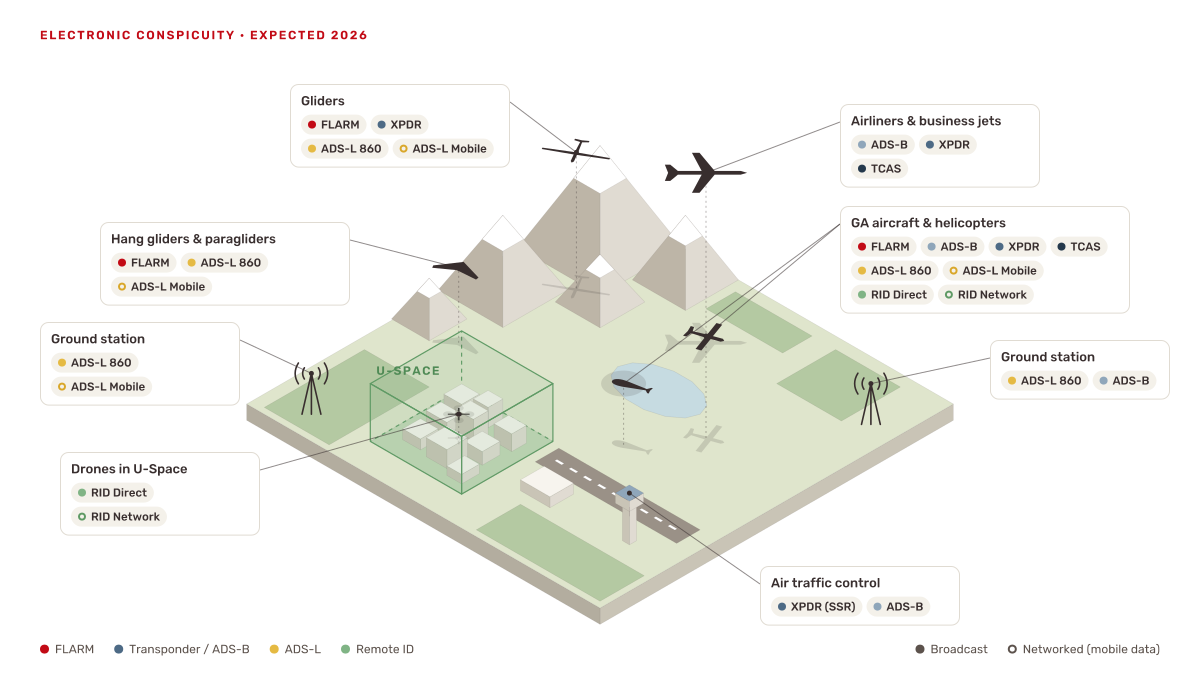
What does this mean for FLARM users?
First things first: FLARM is not going away. ADS-L does not replace FLARM, it complements it.
A large proportion of existing FLARM devices can be upgraded to ADS-L. The only exception is Classic FLARM (more on this in the FAQ below). You can conveniently purchase the licence required for the update in our shop at shop.flarm.com.
The following products are currently available with ADS-L:
- PowerFLARM Core
- PowerFLARM Portable
In addition, many FLARM devices from third-party manufacturers can also be upgraded to ADS-L.
Frequently asked questions
The licence unlocks ADS-L “out”, i.e. the transmission of ADS-L signals on 868 MHz. This allows you to meet the requirements of SERA.6005 (U-space) as well as FASST-CH in Switzerland.
The vast majority of electronic conspicuity devices can only receive one radio channel at a time. To receive both FLARM and ADS-L signals, a device therefore has to switch back and forth between the channels. As a result, reception of ADS-L is usually not possible or only to a limited extent. Our devices will never compromise the performance and safety of FLARM in favour of other protocols.
Wherever possible, we implement new versions of the standard as soon as they become available.
Unfortunately, the current ADS-L specification is not compatible with Classic FLARM. Should this change, we will consider an implementation for Classic FLARM.
Our current products for integration into other manufacturers’ devices also support ADS-L. Whether and how a specific device supports ADS-L is communicated by the respective manufacturer. If licences are required, these are also obtained from the manufacturer – with the exception of the AIR Avionics AT-1.